
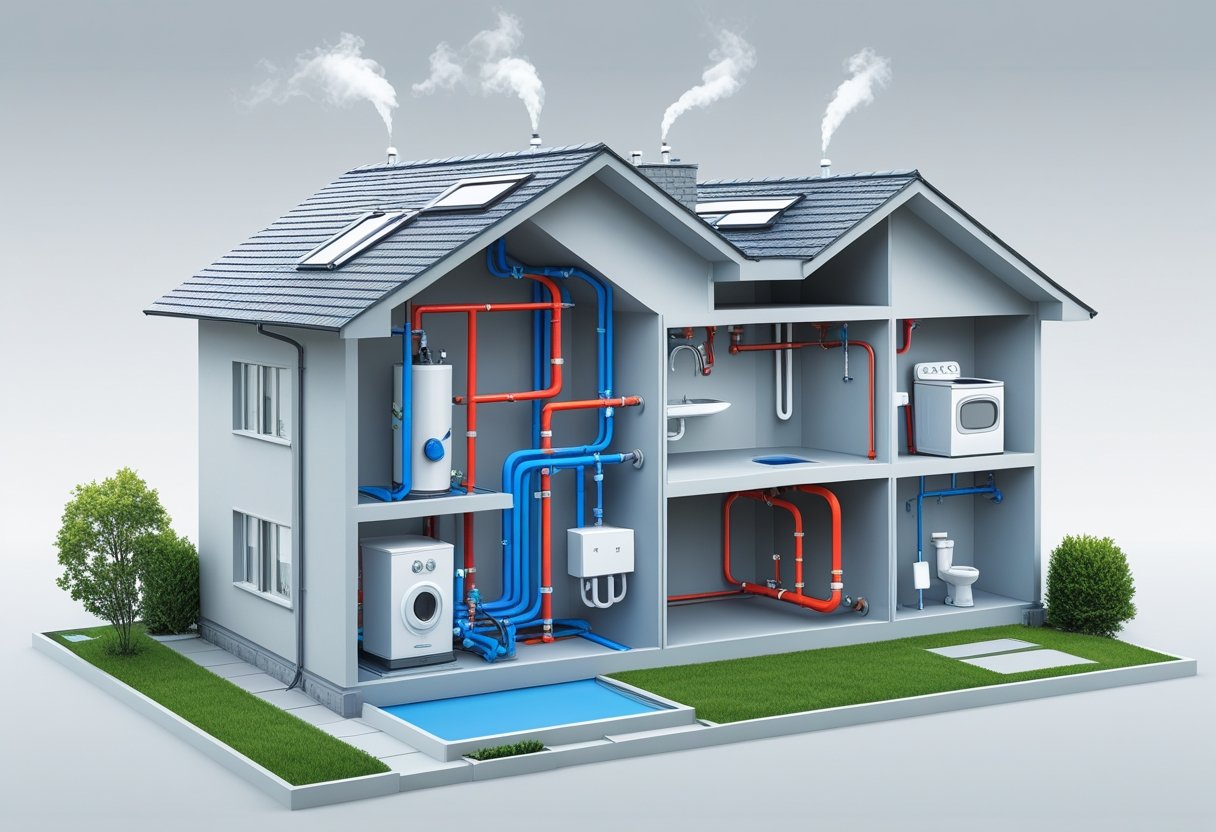
Construction of a new home involves serious planning and several factors to be considered before embarking on the construction. When constructing a new home, you cannot afford to look at the decorations, but you also have to address the plumbing, HVAC systems, and the construction materials that will be employed.
It may be annoying and complicated when you construct a house without proper preparations. An example of this is an inefficient plumbing system that may lead to leaks and significant water damage in the future. In order to prevent any issues, you should make sure that plumbing systems are installed correctly.
These are some of the best safety tips that you can apply when installing the plumbing system of a new home.
Secure Permits
Installation of a plumbing system requires the first step to be to acquire and obtain the correct permits. You might have a long way to go to digest all that, but getting permits will assist in making sure that your home meets all the code requirements, as well as all the safety requirements. To ensure the safety of your family and you, a permit will enable professionals to inspect and assess any errors in the design of your plumbing systems and avoid future problems with pipes.
Consider Your Plumbing Requirement.
When designing a plumbing system, it would be best to take into consideration your current and future plumbing requirements. It implies that you have to determine where your drain lines, plumbing, and sewer will be installed so that they will be functional. Add all your current and future water requirements to your water system when it is available, so that you find it easy to access and save money to repair it in the future.
You also need to think about your outdoor plumbing needs so that you have a sufficient number of outdoor plumbing faucet connections that you can utilize throughout your house. Seasons should also be put into consideration so that you can ensure that your pipes are robust and that they will withstand the harsh weather, especially during winter.
Incidentally, when you talk to plumbing contractors, they can offer you good tips and pieces of advice on how to make your plumbing system work more efficiently and live longer. They are also able to propose improvements that would save you money on repairs in lthe ong run.
Concentrate on the Plumbing System.
When installing a plumbing system, it is important to install all the parts in a single location so that it becomes easier to maintain and repair it in the future. The following are some of the appliances that should be installed together:
- Water Softener
- Water Heater
- Furnace
- Sewer Connection
- Sewage Ejector Pit
- Sump Pump
These can be installed collectively in the basement since it will be the most convenient place to install your system, and it will not be an eyesore. Where there is no basement, you may simply put them on the main floor and in a utility closet, thus doing so in a well-concealed manner.
Consider Water Softeners
In case you have a problem with hard water, then installing water softeners would be ideal in your house. Another thing you should consider is installing one even when you do not have problems at the moment, to ensure that once you have it, you are guaranteed to have this kind of problem solved in the future. Installing water softeners will be hard in the future, so save yourself additional payments by installing them when constructing your house.
When installing something in your home, always keep in mind that it is long-term. You can save money and not get stressed as you would have to install new appliances in your system.
Wet Wall Sharing
One of the ways of saving money when constructing a home is by sharing a wet wall. What exactly is a wet wall? The sewer lines, water supply lines, es and vent stacks are enclosed in a wet wall. Separate wet walls are usually available in houses in various rooms, such as the bathroom and kitchen, to accommodate the pipes; however, a wet wall can be shared to save money. You can create a layout in which the bathrooms are joined with a wall or where a kitchen and a laundry room will be joined with a wet wall.
It will save you money by having a common wet wall since you will only need to install a few labor hours and materials to do so. There will also be less effort to maintain and repair your plumbing since the pipes are not spread out.
List Down Rooms which require access to water.
When planning your plumbing system, it would be most appropriate to take into account all the rooms that will require water access. The 3 highest ranked areas that you must take into consideration include the bathrooms, kitchen, and laundry area.
Bathroom
When you design a house, you have to consider the number of bathrooms that you require, and it is best to consider them one by one. The guest bathroom will you have? A bathtub? A Jacuzzi? A Shower? It would be ideal to list what will be luxurious in the bathroom of your residence, as well as the number of toilets and sinks required.
Kitchen
In designing the kitchen, you must have in mind the appliances you will have in the kitchen. You would like water lines on your refrigerator, dishwasher, and sink. Another thing you should take into consideration is the future renovations that you may be planning to carry out, like adding a kitchen island, nd which may require a plumbing line in case you wish to add a sink in the future.
Laundry Area
Laundry here is equivalent to the bathroom and the kitchen. You must position the washer connections in the correct position that they are easier to install and use. The laundry area should also be properly drained with a drain line to prevent water from accumulating on the floor whenever washing clothes.
Other than these 3 priorities, you also need to have an adequate plumbing layout should you desire having a garden, an outdoor tub, and a pool. For the future, set up an outline of all the things you may need and the things you might not need to install now to be able to install them in the future.
Easily reachable Shut-Off Position
You might desire the convenience of having easy access to your main shut-off valve to access it in case of a crisis. Unlike other people who normally attach them to areas that are difficult to access, you need to consider a more accessible area. This way, you can be able to easily turn off your plumbing system in case of a leak, a burst pipe, or even when you are simply doing a routine check-up. This will save you money, and you can avoid significant water damage if you can easily reach the main valve of your plumbing system.
Takeaway
Installation of new plumbing lines in the future can be expensive. Another way to save money is to make sure that your new home’s plumbing system design will satisfy all your current and future plumbing needs! Make sure that you have a centralized plumbing system, back-up water softeners, and a safety permit in case of need in the future. These tips can assist you in creating an effective plumbing system that will be able to serve for a long time.